Store-bought spray moves roaches around a house; our Lincolnshire, IL technicians bait the harborage itself so the colony doesn't just relocate to the next room. Beyond the disgust factor, roach presence ties to genuine air-quality concerns, which is part of why we treat every call with real urgency.


Every technician on this account has trained specifically on German and American roach biology, not a general pest-control crash course.
Roach reports jump the queue in Lincolnshire — most calls see a truck on-site within hours.
You'll see the total cost before treatment starts, scoped to what the inspection actually finds.
Gel bait, insect growth regulators, and a UV light for finding what's hiding behind the stove — not a generic aerosol can. We also document every visit with harborage photos, giving you a service record if the property ever changes hands.

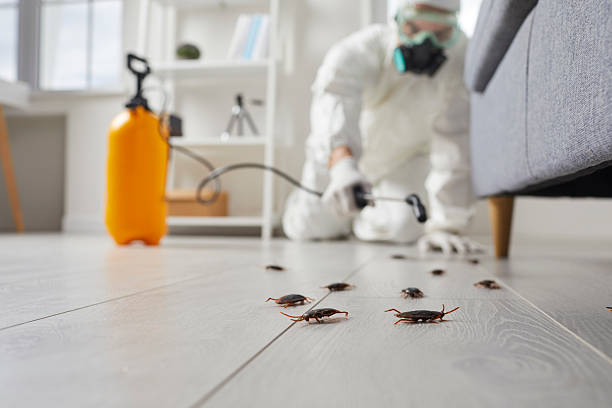
We work the harborage first: under the fridge, behind the dishwasher, inside cabinet voids.
Bigger roaches, different habits — American roaches move through drains and foundation gaps, so we treat the perimeter, not just the kitchen.
We come back roughly two to three weeks out specifically to catch nymphs from capsules the first visit missed.
We log every commercial visit for compliance purposes, since a failed inspection costs a restaurant far more than the service call.
Beyond the bait, we flag the leaky pipe or food debris that's inviting roaches back in the first place.
Ongoing service keeps stations fresh and catches new activity before it becomes a repeat infestation. We also flag the specific conducive condition — a leak, a food source — that's letting roaches keep coming back.
A quick description of where and when shapes which formulation the technician brings out.
The technician arrives already stocked for German or American roach work, no second trip needed for supplies.
We check under appliances, behind outlets, and along plumbing before quoting anything — the visible roach is rarely the whole story.
Bait goes in at the harborage points, with a documented recheck window and our written guarantee behind it.
Found roaches breeding behind our dishwasher — two other companies never checked there. Gone in two visits.
Run a diner, needed inspection paperwork fast. Got the treatment and the documentation same week.
Called at 9pm about daytime roach activity. Technician was here before 10am the next day.
The recheck visit caught nymphs we didn't know were coming. That's the part most companies skip entirely.
Building super here — we manage roach complaints across sixty units. Their gel bait rotation cut callbacks by more than half.

Coverage spans Lincolnshire and nearby Lincolnshire, IL communities, prioritized toward the denser housing types that see the most repeat activity. Dense multi-unit housing tends to see the heaviest roach pressure in Lincolnshire, so routing accounts for that when scheduling same-day visits. We track callback rates by treatment type internally, which is part of why gel bait stays our default recommendation over broadcast spray.

Nocturnal roaches showing up in daylight usually means the colony's outgrown its harborage and is being pushed out to forage.
Most homes see activity drop within three to five days, with full elimination over two to four weeks as the bait cycles through the colony.
We'll tell you exactly what to clear when scheduling — usually just under-sink cabinets and stovetop drawers.
We use targeted placement instead of broadcast spray, which keeps active ingredient away from living space.
German roaches are smaller and tan, breeding indoors near food and water; American roaches are larger and reddish-brown, often traveling in from drains or outdoor harborage.
Our guarantee is written into the invoice: if it's still active after the follow-up, we come back at no cost. We also suggest a short walkthrough with the technician after treatment so you know which spots to watch going forward.
One call gets a licensed technician on-site with the right bait for German or American roach elimination.
Call +1-844-564-2570